


Monday 25th March 1991.
Thirty-five years ago, my life changed.
I had major spinal surgery in the Royal National Orthopaedic Hospital in Stanmore. At that age, I didn’t fully understand the scale of it, but I understood enough to know this wasn’t routine.
My neck was unstable because of Morquio.
One bad fall, one knock, and I could have been paralysed. That was the reality. So the surgery wasn’t optional. It was about protecting my future, even if it meant going through something most people will never experience.
They took bone from my legs and fused my neck to strengthen it.
And then came the part that really stayed with me.
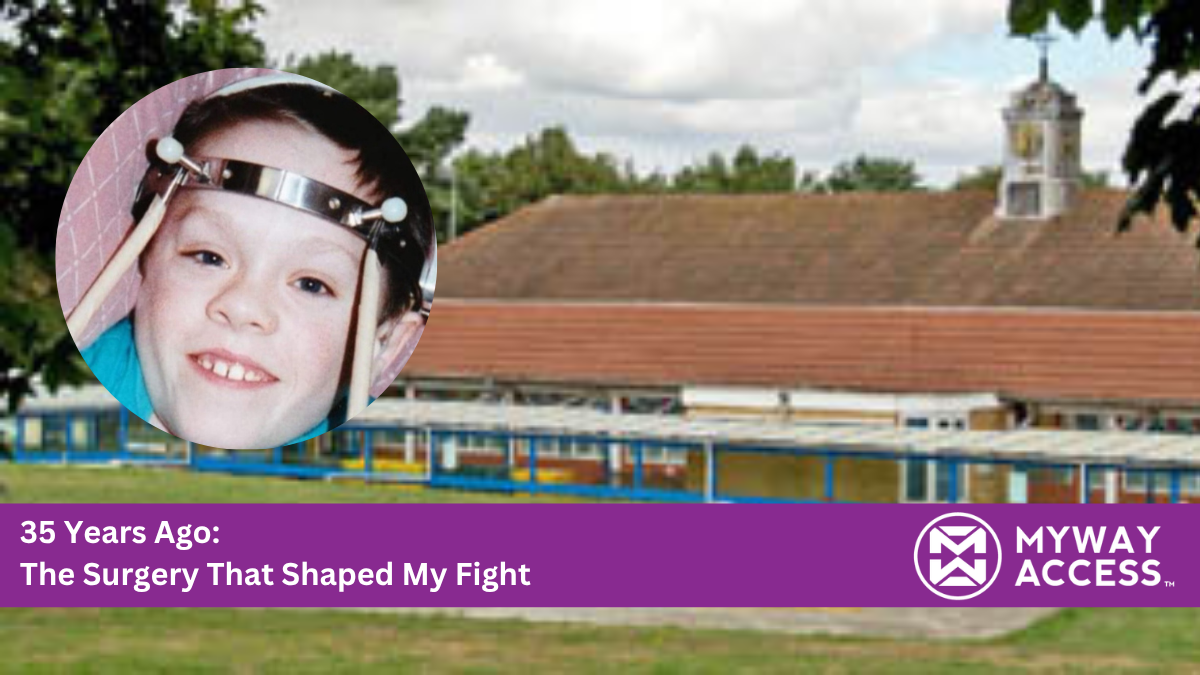
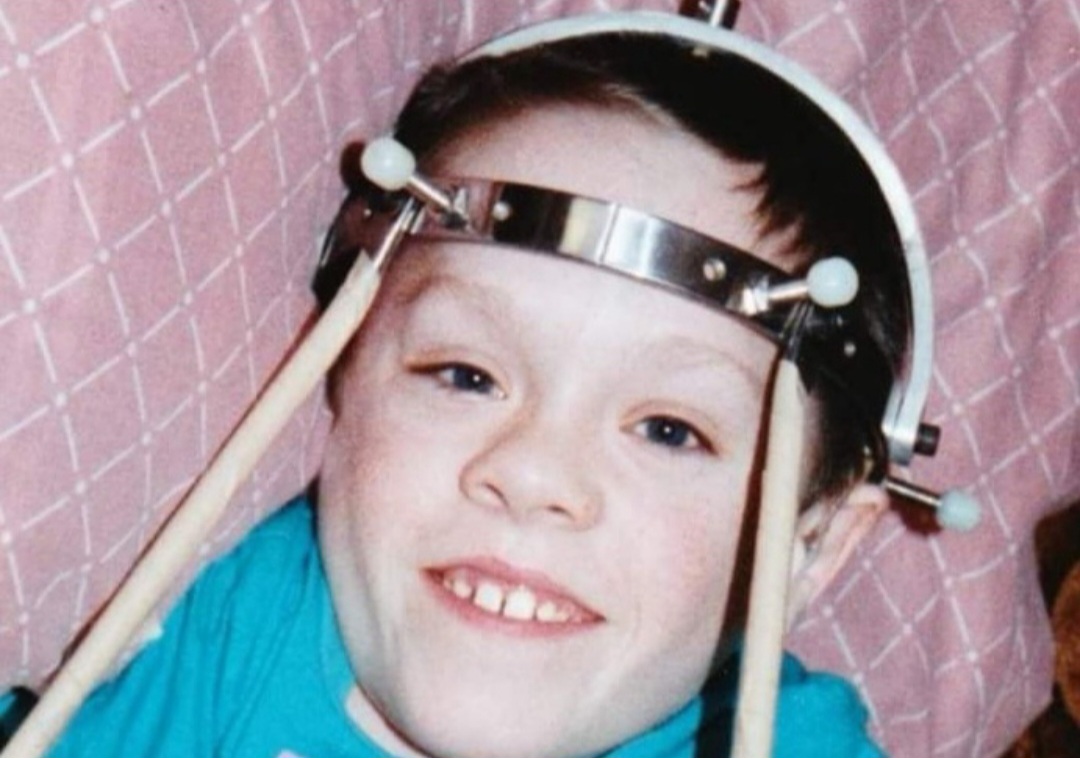
From March through to August, I lived in a full body cast. A metal halo screwed into my skull and bolted to that cast. No movement. No sitting up beyond 45 degrees. Everything slowed down, whether I liked it or not.
It was uncomfortable. It was restrictive. And at times, it was lonely.
But I didn’t disappear into it.
I found ways to stay connected. To laugh. To still be part of life around me. Looking back now, I realise that wasn’t just coping. That was the beginning of something in me that never left.
Resilience. Awareness. And a refusal to be written out of my own life.

I spent a month in England recovering, then more time in Musgrave Park Hospital. The wards were old army wards. Cold, basic, no comfort built in. You were expected to get on with it.
And I did.
But I also learned.
I learned what it feels like to rely on systems. I learned what it feels like when decisions are made around you, not with you. I learned how quickly disabled people can become passive in the eyes of others, rather than active participants in their own lives.
And those lessons stayed.
In the middle of all of that, we lost our dog, Skippy. Knocked down and killed. When you’re already in a vulnerable place, that kind of loss hits differently. It’s something I still carry.
But so is the kindness.
The letters I received during that time meant more than people probably realised. Friends, classmates, neighbours, even strangers. They showed up. And that matters.
Because when you’re isolated, even small acts of connection can carry you through.
I missed most of my final year at primary school. But my school made sure I wasn’t left behind. Pupils came out to sit with me, to learn with me, to keep me included.
That wasn’t tokenistic, it was real inclusion. And once you’ve experienced that properly, you don’t forget it. You carry it with you, and you start to notice very quickly when it’s missing elsewhere.
That time in my life didn’t just shape me as a person, it shaped how I see the world. It’s why I don’t accept poor access as something inevitable or just “the way things are.” It’s why I challenge systems that exclude, and why I push back when disabled people are treated as an afterthought.
Because I’ve been on the other side of it. I know what it feels like to depend on those systems. I know the difference it makes when they work, and the damage they do when they don’t.
That’s where my activism comes from. Not from theory or policy language, but from lived experience.
That surgery didn’t just protect my spine. It gave me perspective, it gave me a voice, and it gave me a fight that I still carry today.
Thirty-five years on, I can still see it clearly.
And I can see everything that came from it.