


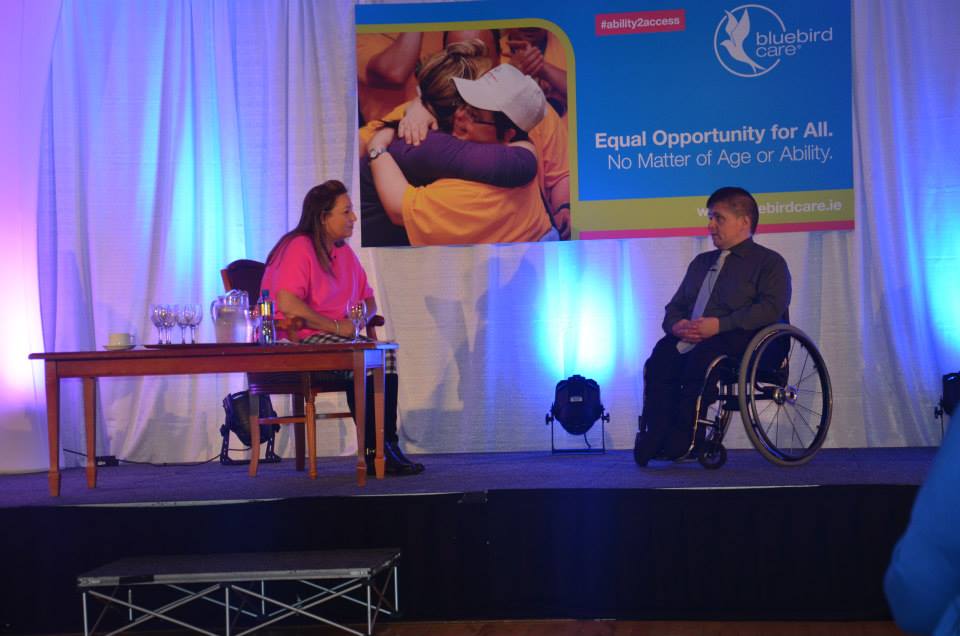
This paper will examine the issue of disability hate crime. Why No Legal definitions exist will be outlined and reasons factual or perceived for occurrences will be discussed. How this impacted on public perception of people with disabilities in particular in Ireland and compare this with Europe. How it effects the lives of people with disabilities and their roles in society. How legislation was developed and statistics relating to disability hate crime are gathered if at all.
The failure of successive governments in Ireland to ratify the UN convention on the rights of people with disabilities will be examined. How this has influenced the lives of people with disabilities will be explored and again how the public perceive people with disabilities and the levels of hate crime experienced. This is the chosen subject because a conference last year in the EU Parliament in Brussels was where the issue was first addressed for the author. Subsequently as the economic situation remains poor the author will examine if this impacts on the level of hate crime.
The first thing that is important to point out in this essay is that people with a disability appear to be largely irrelevant to powers that be in Ireland in relation to hate crime. This conclusion has been reached very early in putting this essay together as it has been practically impossible to establish where if anywhere statistics regarding disability hate crime are gathered. The Department of Justice, The Central Statistics Office, The Disability Federation of Ireland, The National Disability Authority and the Garda Crime Unit have all been contacted and unfortunately none of the agencies were able to provide any information. There does not appear to be anywhere in this country where such crime is recorded statistically and the reasons for this fall into the area of why the EU Convention on the Rights of People with Disabilities has not been ratified.
In comparison a similar situation exists in Britain where a recent crime report by the police commission there did not reflect a picture of incidents of Disability Hate Crime and reasons for this appear to include the fact that members of the police force in Britain are too embarrassed or afraid to offend a crime victim by asking whether or not they have a disability.
In Ireland there does not appear to be a legal definition specific to disability hate crime and it would seem reasonable to say that one reason for the lack of available statistics may be because of it not being defined in law.
The impact this has had on disabled people is that there is a perception that they are unwilling to work or take part in an economically beneficial way in society.
In 2008 the unemployment rate for people with disabilities was more than double the equivalent for persons without a disability (16.5% as opposed to 7.2%). The census in Ireland indicated that people with a disability were 2.5 times less likely to be in employment than people who do not have disabilities.
The gap in the public sector between disabled and non disabled people in many EU countries has narrowed but it is unclear if this is because there are more people with disabilities in employment or if the numbers of people without disabilities has decreased.
However in the case of Ireland there is an embargo on public service jobs, and it is more likely that the percentage of disabled people has increased as opposed to the actual number and this will be as a result of the numbers of non disabled people who have left the sector.
Between 2008 and 2010 in some European countries including Ireland the rates of people with a disability at risk of poverty has sharply increased. According to a 2010 report over 20% of people with a disability in EU countries are at risk of poverty, this compares to just under 15 % for people without a disability. In some European countries the at risk of poverty percentage for people who have a disability is over 25%.
Media and society increasingly focus in such times on the stereotypical view that people with disabilities are scroungers. Research undertaken in the University of Glasgow shows that the level of fraud that is carried out by people with disabilities is overestimated very significantly and in this authors opinion this further fuels the fire and is one factor that has led to the rise in hate crimes against disabled people.
A 2012 survey showed a deterioration in attitudes to people with a disability in comparison to a study that was carried out pre the economic crisis. The findings of the same survey also included that 1 in 5 people would object if a child with an intellectual disability was placed in the same class as their child, this figure has risen from 8% in 2006.
Other attitudes in the surveys findings portrayed the view that people with disabilities were not able to participate in society because of their disability rather than society recognising that the non participation of people with disabilities is more to do with the attitudinal and environmental barriers they face. So the reality is that in times of austerity attitudes would appear to harden, often this is to do with negative media portrayal of people with disabilities where as stated earlier you hear words like scrounger and benefit cheats attributed to people with disabilities.
With reductions and cuts to budgets which were personalised, choices for people with disabilities are limited to independently form their own opinion and for them to be able to choose which services they want to buy. Decreasing social service levels have particularly affected people with disabilities, they have been hit more as the services to people with disabilities have been curtailed significantly by limited public spending and this feeds further into the negative attitudes towards disabled people.
With cuts to things like personal assistant services and in Ireland particularly the cuts to the mobility allowance and the motorised transport grant feed into the perception that people with disabilities are not willing to get involved in employment will be enhanced and may feed further into the rise in disability hate crime in this authors opinion.
The failure of the government to ratify the UN convention on the rights of people with disabilities has seen legislation sometimes been adopted but not put into effect. An example of this is the Education for Persons with Special Needs Act in 2004 which was adopted but not put in to effect. This is of course in stark contrast to the strong commitment of both government parties of inclusive education for children with disabilities.
It would appear that there are no specific legal definitions of what disability hate crime is. There would also appear to be no real willingness on the part of the powers that be to address the rise in this type of crime and no urgency to put in place such legislation that would guard against it. This coupled with the recent cut to the aforementioned mobility allowance and motorised transport grant further isolates people with disabilities and does nothing to address the inequalities that exist in enabling people with disabilities to fully participate in life whether it be through education, employment and training, volunteering and social activities. This further feeds in to the notion that people with disabilities are lazy, scroungers, living off the state and are happy to do so.
In conclusion the findings of this essay are that despite the fact that there is much anecdotal evidence of there being a large rise in recent years in disability hate crime there are no statistics to be found to back this up. Also there is no willingness by the powers that be to enact such legislation to combat against such crime. Neither would there appear to be any great urgency to ratify things that would give greater protection to people with disabilities like the UN convention on the rights of people with disabilities.
Despite the Irish Government citing that there is an issue with ratifying the UN convention in relation to legislation on mental capacity the reality is that there is no legal impediment to the immediate ratification and reality would suggest there is anecdotal evidence to suggest the real reason for the lack of progress in ratifying the UNCRPD is that the economic crisis has played a role in the non implementation by the government.
There needs to be greater joined up thinking from the aforementioned services Department of Justice, The Garda Crime Unit etc who have as yet failed in recognising disability hate crime and it needs specific legislation to deal with it both to protect potential victims and to deter perpetrators of such crimes.
The author will continue to pursue this subject in the research project as it needs highlighting and is important in ensuring empowerment of people with disabilities going forward.
Thanks for posting this Dermot. Your website is a brilliant resource for people with disabilities.
You’re very welcome Frank. Thank you for writing such a fantastic blog, which highlights the vagueness and lack of urgency in Irish laws when it comes to Disability Hate Crime.
Thanks also for your kind words on my website. I must head to Letterkenny and get it on the website. 🙂